 Free Shipping Above ₹800

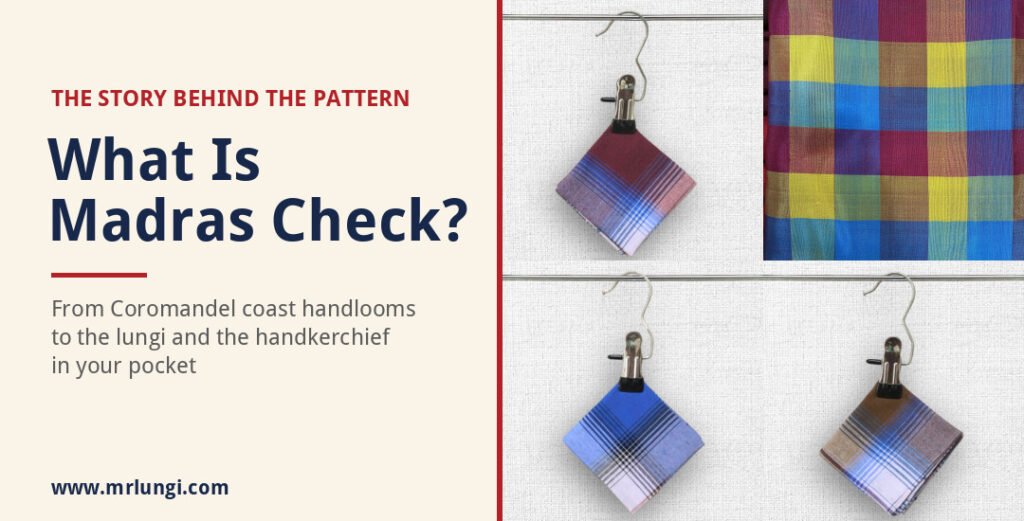
Short answer: Madras check is a lightweight cotton fabric woven in bright, uneven checks, named after Madras, the old name of Chennai. The pattern is yarn-dyed: the threads are coloured before weaving, so the checks look the same on both sides of the cloth. It began with handloom weavers on the Coromandel coast of Tamil Nadu and Andhra Pradesh, was traded across the world through Madras port from the 1600s, and still lives on today in the everyday lungi and the cotton handkerchief.
You have probably owned something in Madras check without knowing its name: a checked lungi, a school uniform shirt or a hanky in red and blue squares. This guide explains what makes it Madras check, where the pattern came from, how it differs from gingham and tartan, and how to spot the real woven kind.
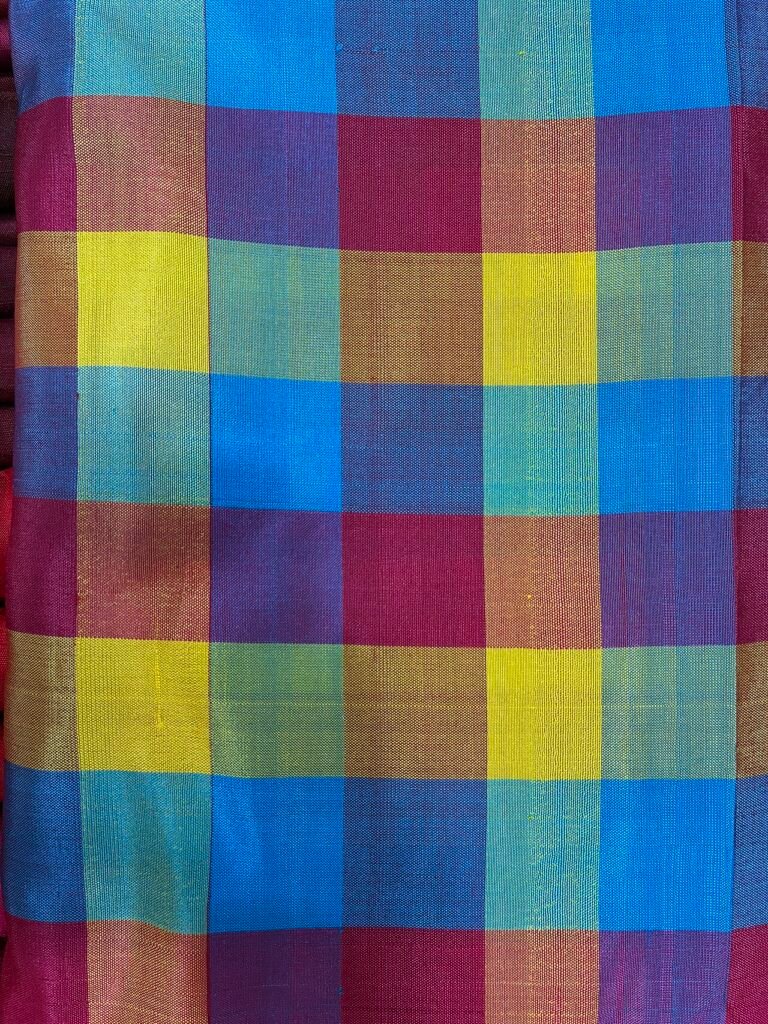
Madras check at a glance
| Feature | Madras check |
|---|---|
| Named after | Madras, now Chennai, Tamil Nadu |
| Where it began | Handloom weaving villages along the Coromandel coast (Tamil Nadu and coastal Andhra Pradesh) |
| Fabric | Light, breathable cotton, usually plain weave |
| How the pattern is made | Yarn-dyed: coloured threads are woven into checks, not printed on top |
| Typical look | Uneven (asymmetric) checks in several bright or deep colours |
| Classic colours | Red, indigo blue, brown, yellow, green, maroon |
| Best known uses | Lungis, handkerchiefs, shirts, shorts, pocket squares |
| Why people love it | Cool in hot, humid weather and looks the same on both sides |
Where does the name Madras check come from?
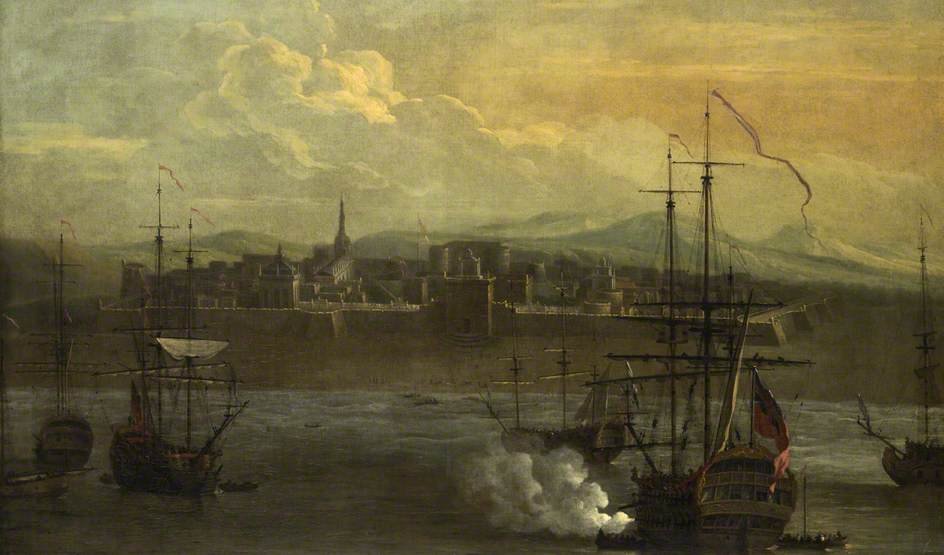
The name comes from the city. Madras, renamed Chennai in 1996, grew around Fort St George, the trading post the English East India Company set up on the Coromandel coast in the 1640s. Cotton cloth woven in the villages around it was collected by merchants, shipped out of Madras port and sold abroad as “Madras” cloth.
So “Madras” never meant one factory or one town. It was a trade name for checked and striped cottons from this whole coastal region. Over time, the bright checked kind became so popular abroad that “Madras” turned into the name of the pattern itself, used even for cloth made far from India.
A short history of Madras check
| Period | What happened |
|---|---|
| Before the 1600s | Weavers on the Coromandel coast were already famous for fine, colourful cotton, traded across the Indian Ocean to Southeast Asia, Arabia and East Africa. |
| 1640s | The East India Company builds Fort St George. Madras becomes a major port for cotton cloth. |
| 1700s to 1800s | Large checked squares sold as Real Madras Handkerchiefs travel to Europe and West Africa. In the Niger Delta, the Kalabari people adopt them as injiri, a cloth still worn at ceremonies today. |
| 1950s to 1960s | Madras check becomes a summer favourite in America. Natural dyes that ran in the wash were sold as bleeding Madras, and the faded look became part of its charm. |
| Today | Madras check is everyday wear in South India, in lungis, shirts and handkerchiefs, and a classic summer pattern around the world. |
Many old Madras handkerchiefs were not small pocket hankies. They were large squares of checked cloth, often sold in pieces of several squares joined together, which buyers cut apart and used as head ties, wraps or shoulder cloths. Towns on the coast such as Chirala in Andhra Pradesh are still known for weaving them.
How Madras check is woven
What makes a fabric Madras check is not only the pattern but how it is made:
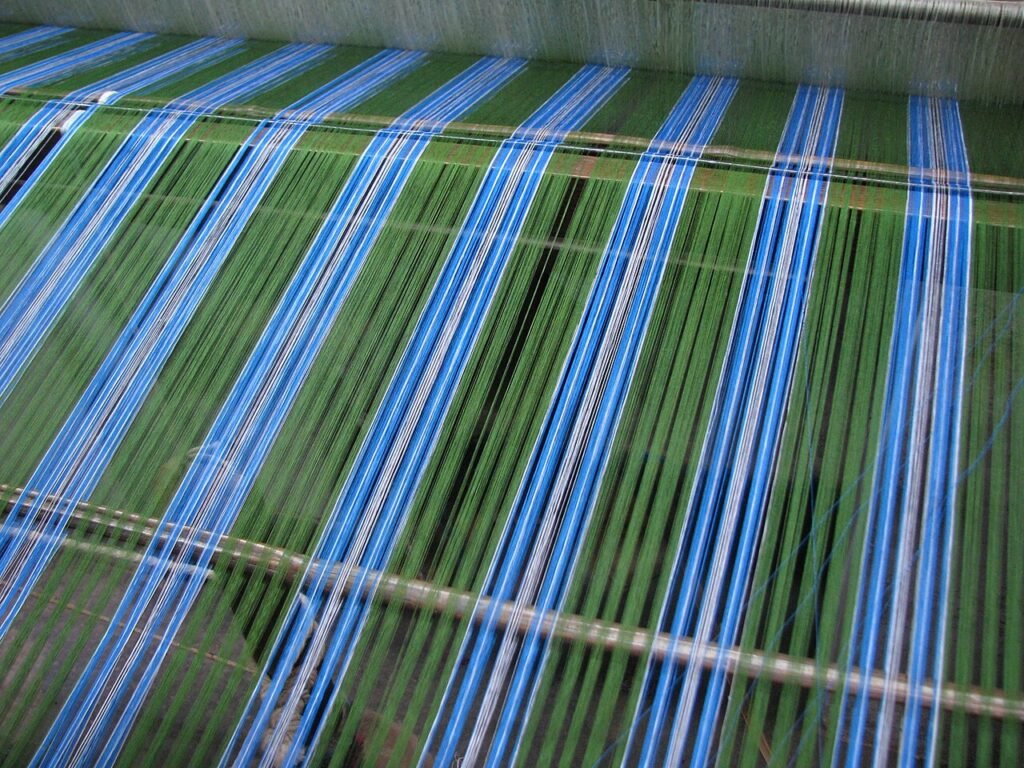
- The yarn is dyed first. Cotton threads are dyed in different colours before they go on the loom.
- The warp is set up in colour bands. The long threads on the loom (the warp) are arranged in stripes of colour.
- The weft crosses in the same bands. The cross thread (the weft) is woven in matching colour bands, and where the stripes cross, the checks appear.
- Uneven widths make the Madras look. The bands are of different widths, so the checks are not perfect, equal squares like a chessboard.
Because the colour is inside the thread, a real Madras check looks the same on the front and the back, and the pattern never wears off the way a print can. On a handloom, small variations in tension and thread give each piece a slightly irregular, hand-made character.
What is bleeding Madras?
Early Madras cloth was dyed with natural, plant-based dyes such as indigo. These colours were not fully fixed, so they ran a little into the neighbouring checks when the cloth was washed, giving a soft, blurred look over time. Rather than hide it, sellers in the USA in the late 1950s turned it into a selling point and called it bleeding Madras, with the promise that every shirt would fade in its own way.
Most Madras check sold today, including ours, uses modern colour-fast dyes. It may release a little colour in the first few washes, which is why we suggest washing it separately in cold water the first two or three times.
Madras check vs gingham vs tartan
All three are checked fabrics, but they are easy to tell apart once you know what to look for:
| Madras check | Gingham | Tartan (plaid) | |
|---|---|---|---|
| Origin | Madras region, South India | Popular in Europe from the 1700s; the name is linked to Southeast Asia | Scotland |
| Colours | Many bright or deep colours | Usually one colour plus white | Several colours, often dark |
| Check size | Uneven, mixed widths | Even, equal squares | Repeating pattern of bands and lines |
| Fabric | Light cotton | Light cotton | Usually wool or heavier cloth |
| Feels best in | Hot, humid weather | Warm weather | Cold weather |
| Typical uses | Lungis, handkerchiefs, summer shirts | Shirts, tablecloths, dresses | Kilts, scarves, jackets |
How to tell a real woven Madras check
Plenty of “Madras” products today are simply printed with a check pattern. Here is how to spot the real woven kind:
- Turn it over. A woven Madras check looks the same on both sides. A printed one is pale or plain on the back.
- Look at the threads. Up close, you can see individual coloured threads crossing. On a print, the colour sits on the surface.
- Feel it. Real Madras is light and soft, and gets softer with every wash. Prints often feel stiff.
- Check the edges. Where the cloth is cut, a woven check shows coloured threads; a print shows white.
- Expect small irregularities. Slight differences in check size are normal, especially in handloom cloth.
We explain more about why woven checks beat printed designs in woven vs printed handkerchiefs.
Madras check in the lungi
In Tamil Nadu and Kerala, the most familiar Madras check is the one you see every day: the checked cotton lungi. The same idea of coloured threads woven into bold checks gives lungis their cool, airy feel and colours that last for years. Checks are one of the classic types of lungi, and you can browse ours in the Madras check and check lungis collections.

Madras check in your pocket: our handkerchiefs
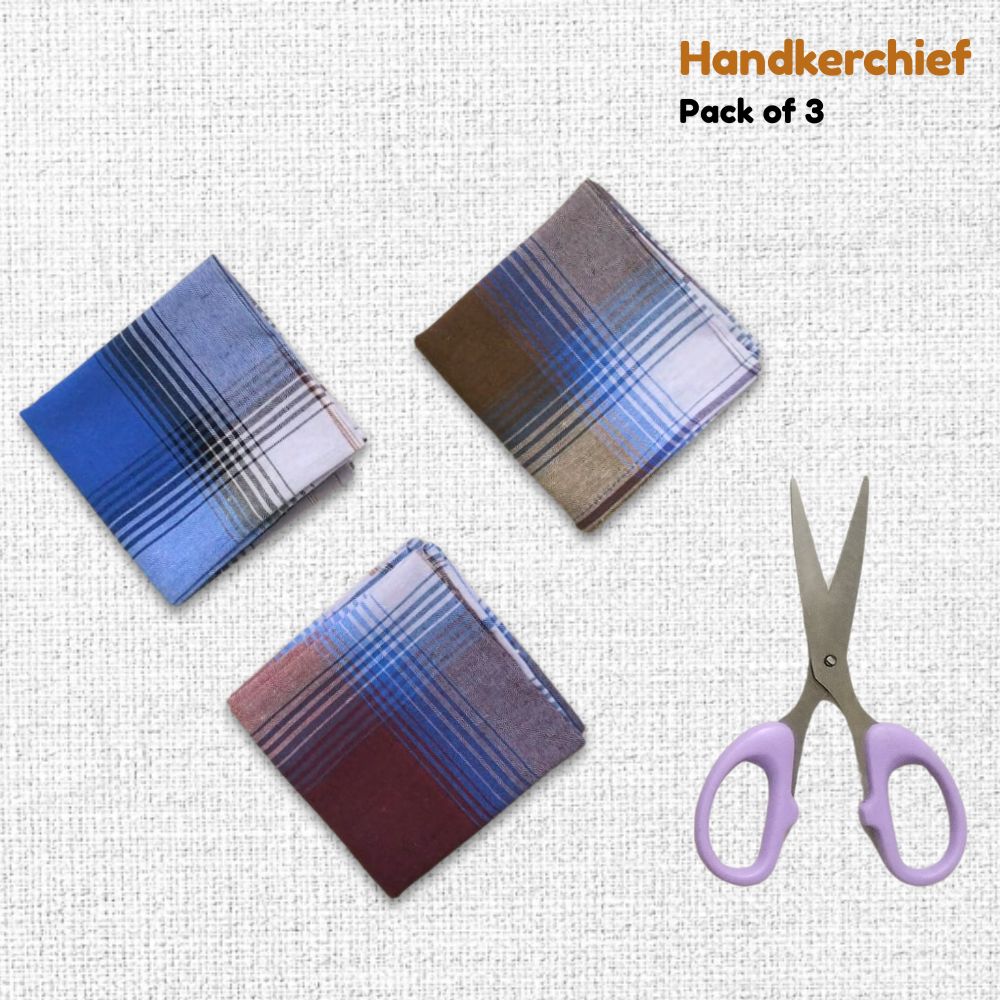
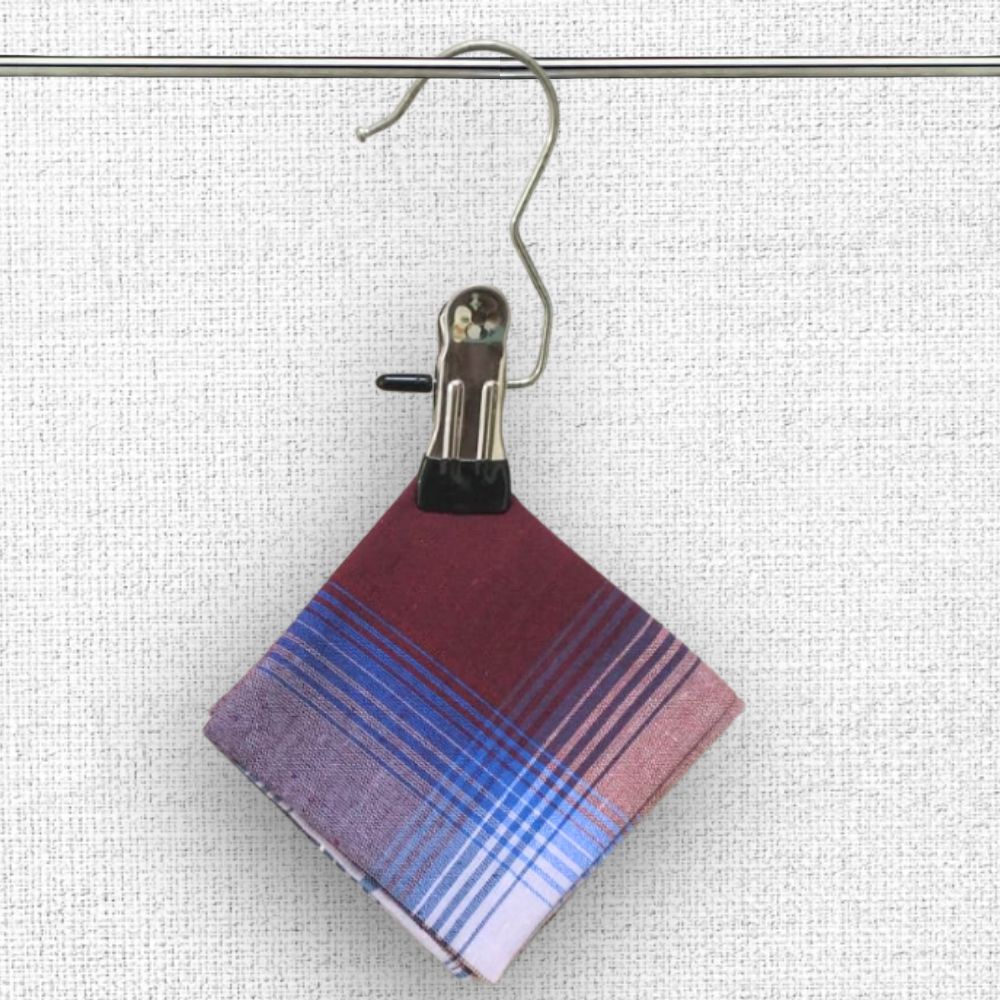
The Madras handkerchief has come full circle. Our Madras check handkerchiefs are woven in the same soft lungi cotton, with the colours in the thread, not printed on top. That is why lungi fabric makes such a good handkerchief: it absorbs sweat quickly, stays cool in humid weather and gets softer with every wash.
| Design | Colours | Best for |
|---|---|---|
| Madras Check Handkerchiefs, Pack of 3 | Red, blue and brown | Daily use, office, gifting |
| Cotton Handkerchief Set of 8 | 8 assorted woven designs | A full week of fresh hankies |
| Checked handkerchief collection | Many check sizes and colours | Choosing your favourite check |
A Madras check hanky also makes a great pocket square: its deep colours stand out against a plain navy or grey jacket. See how to fold a handkerchief for six easy folds, or browse every design on our cotton handkerchiefs page.
How to care for Madras check
- Wash separately in cold water for the first two or three washes.
- Use a mild detergent and avoid bleach, which fades the colours.
- Dry in the shade, inside out if possible, to keep the colours bright.
- Iron on the cotton setting while slightly damp for a crisp finish.
Frequently asked questions about Madras check
What is Madras check?
Madras check is a lightweight cotton fabric woven in bright, uneven checks. The threads are dyed before weaving, so the pattern looks the same on both sides. It is named after Madras, the old name of Chennai, where the cloth was traded from.
Why is it called Madras check?
Because the cloth was woven by handloom weavers around Madras on the Coromandel coast and shipped to the world from Madras port, especially after the East India Company built Fort St George there in the 1640s.
What is the difference between Madras check and gingham?
Madras check uses many colours in uneven check sizes. Gingham uses one colour plus white in even, equal squares.
Is Madras check the same as plaid?
Madras is a kind of plaid in the wider sense of a checked pattern, but it is light cotton with uneven, bright checks, while traditional Scottish tartan plaid is usually heavier wool in a regular, repeating pattern.
Does Madras check fade?
Old Madras made with natural dyes was famous for bleeding colour. Modern Madras check uses colour-fast dyes, but it is still best to wash it separately in cold water for the first few washes.
Photo credits: Madras check fabric by Shweta Venkateswaran (Wikimedia Commons, CC0). Fort St George, Madras, by George Lambert and Samuel Scott, c. 1731, British Library (Wikimedia Commons, public domain). Cotton threads becoming a lungi by McKay Savage (Wikimedia Commons, CC BY 2.0). Photos resized.
