 Free Shipping Above ₹800

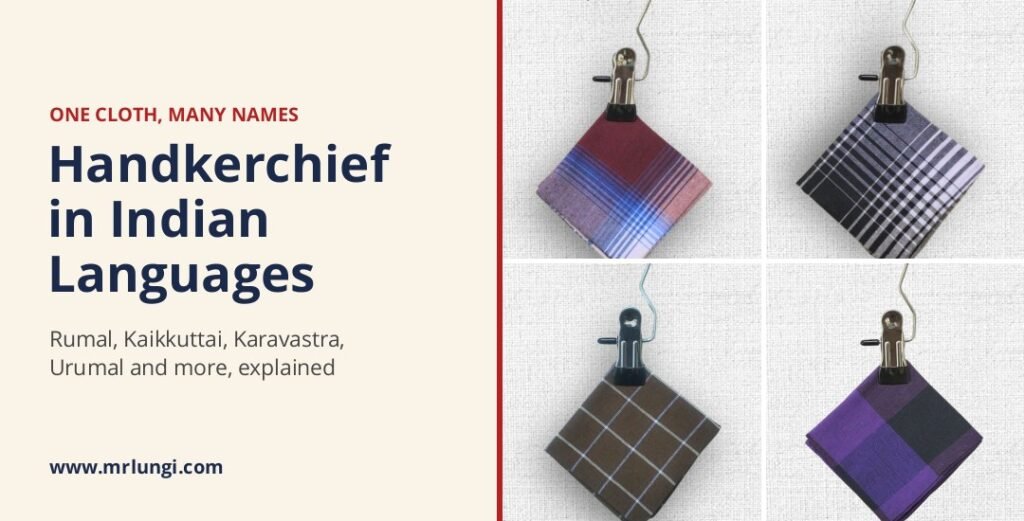
Short answer: In most Indian languages a handkerchief is called a rumal (रूमाल), a word that came from Persian rūmāl, meaning “face-wiper”. You will hear rumal in Hindi, Urdu, Marathi, Gujarati, Punjabi, Bengali, Assamese and Odia, and rumalu in Telugu and Kannada. South India also has its own “hand cloth” words: kaikkuttai (கைக்குட்டை) in Tamil, karavastra (ಕರವಸ್ತ್ರ) in Kannada, cheti rumalu (చేతి రుమాలు) in Telugu, and urumal (ഉറുമാൽ) or kailesu (കൈലേസ്) in Malayalam.
The small square of cotton in your pocket goes by many names across India. Here is a quick table of what it is called in each language, what the words mean and where they come from.
Handkerchief in Indian languages: quick table
| Language | Mainly spoken in | Word for handkerchief | In its script | What the word means |
|---|---|---|---|---|
| Hindi | North and central India | rumal | रूमाल | From Persian, “face-wiper” |
| Urdu | North India and the Deccan | rumal, dastmal | رومال، دستمال | “Face-wiper” and “hand-wiper” |
| Tamil | Tamil Nadu, Puducherry | kaikkuttai (often spelt kaikuttai) | கைக்குட்டை | kai (hand) + kuttai (small cloth) |
| Telugu | Andhra Pradesh, Telangana | rumalu, cheti rumalu, chetigudda | రుమాలు, చేతి రుమాలు, చేతిగుడ్డ | “Rumal”, “hand rumal”, “hand cloth” |
| Kannada | Karnataka | karavastra, rumalu, kai chowka | ಕರವಸ್ತ್ರ, ರುಮಾಲು, ಕೈಚೌಕ | kara (hand) + vastra (cloth); “hand square” |
| Malayalam | Kerala, Lakshadweep | urumal, kailesu, kaithoovala | ഉറുമാൽ, കൈലേസ്, കൈത്തൂവാല | Local form of rumal; kai (hand) + a word for towel |
| Marathi | Maharashtra | rumal | रुमाल | From Persian, “face-wiper” |
| Gujarati | Gujarat | rumal, hath-rumal | રૂમાલ, હાથરૂમાલ | “Rumal”, “hand rumal” |
| Punjabi | Punjab | rumal | ਰੁਮਾਲ | Handkerchief, also a scarf or headscarf |
| Bengali | West Bengal, Tripura | rumal | রুমাল | From Persian, “face-wiper” |
| Assamese | Assam | rumal | ৰুমাল | From Persian, “face-wiper” |
| Odia | Odisha | rumala | ରୁମାଲ | From Persian, “face-wiper” |
| English (Indian use) | All over India | handkerchief, hanky, kerchief | – | hand + kerchief, from Old French for “cover the head” |
Spellings in English letters vary from place to place (rumaal, kaikuttai, karchif). The script column shows the standard spelling.
What does rumal mean?
Rumal comes from the Persian rūmāl, made of rū (face) and māl (wiping or rubbing). So a rumal is, quite literally, a face-wiper.
For centuries Persian was the language of royal courts, record-keeping and trade across much of India, under the Delhi Sultanate, the Mughals and the Deccan sultanates. Everyday words travelled with it, and rumal settled into Hindi, Urdu, Marathi, Gujarati, Punjabi, Bengali, Assamese and Odia, and further south as rumalu in Telugu and Kannada and urumal in Malayalam. That is why a shopkeeper in Kolkata, Pune and Amritsar will all understand you if you ask for a rumal.
Urdu also has dastmal, from dast (hand), the “hand-wiper”. The word even went the other way: English dictionaries list rumal as an Indian word for a handkerchief or kerchief.
South Indian names: kaikkuttai, karavastra, cheti rumalu and urumal
The southern languages often describe the handkerchief simply by what it is: a small cloth for the hand.
- Tamil: kaikkuttai (கைக்குட்டை). Kai means hand and kuttai is a small piece of cloth. In daily talk many people in Tamil Nadu also just say “kerchief”.
- Telugu: cheti rumalu (చేతి రుమాలు). Cheti means “of the hand”, so this is a hand rumal. Plain rumalu is common too, and dictionaries also list chetigudda, “hand cloth”.
- Kannada: karavastra (ಕರವಸ್ತ್ರ). From Sanskrit kara (hand) and vastra (cloth). Rumalu and kai chowka, “hand square”, are also used.
- Malayalam: urumal (ഉറുമാൽ) and kailesu (കൈലേസ്). Urumal is the Malayalam form of rumal. Thoovala (തൂവാല), which came from the Portuguese toalha, mostly means a towel, and kaithoovala, “hand towel”, is also used for a hanky.
When a rumal is more than a pocket hanky
In India the word rumal covers more than the hanky in your pocket:
- A scarf or towel. In Punjabi, rumal can also mean a scarf or headscarf. In Gujarati and Bengali the same word is also used for a towel.
- Rumala Sahib. In gurdwaras, the rumala is the cloth used to cover the Guru Granth Sahib.
- Chamba rumal. A finely embroidered square cloth from Chamba in Himachal Pradesh, a traditional wedding gift and a registered Geographical Indication (GI).
- Telia rumal. A cloth woven from oil-treated, tie-dyed yarn that began in Chirala, Andhra Pradesh. The Puttapaka Telia Rumal from Telangana now has its own GI tag.
- Rumali roti. This bread is so thin and soft that it is served folded like a handkerchief, which is how it got its name.
Whatever you call it, choose cotton
Kaikkuttai or rumal, the best everyday handkerchief for Indian weather is soft woven cotton: it soaks up sweat, dries quickly and gets softer with every wash (see our cotton vs linen vs polyester guide for why).
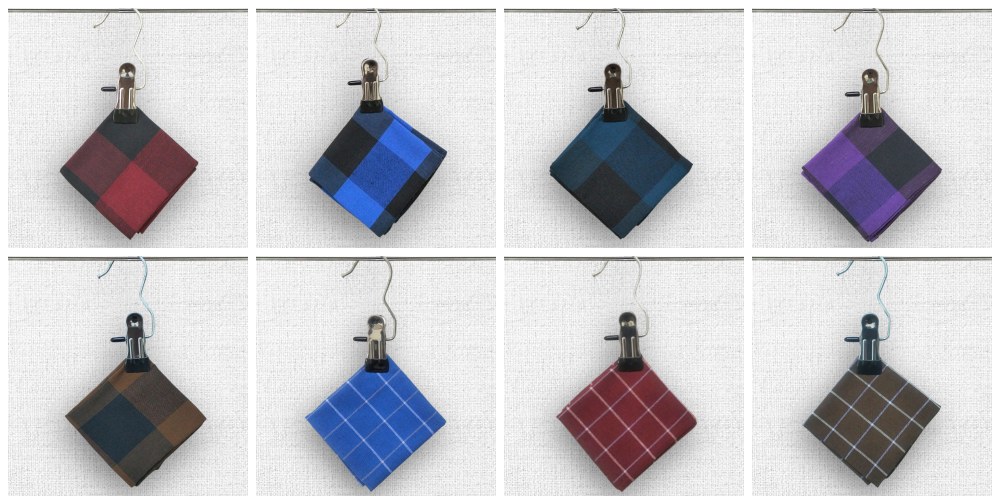
- Want one for every day of the week? The Cotton Handkerchief Set of 8 gives you eight assorted woven designs.
- Prefer to pick your own? Browse every check and stripe on our cotton handkerchiefs page.
- Curious about the checks? Read What is Madras check? for the story of the pattern, or 15 everyday uses of a cotton handkerchief for ideas.
Frequently asked questions
What is a handkerchief called in Hindi?
In Hindi a handkerchief is called rumal (रूमाल). The word came from Persian rūmāl and literally means face-wiper.
What is a handkerchief called in Tamil?
In Tamil a handkerchief is called kaikkuttai (கைக்குட்டை), often spelt kaikuttai. Kai means hand and kuttai means a small piece of cloth. Many people also simply say kerchief.
What is a handkerchief called in Telugu and Kannada?
In Telugu it is rumalu or cheti rumalu (చేతి రుమాలు), meaning hand rumal. In Kannada it is karavastra (ಕರವಸ್ತ್ರ), from kara (hand) and vastra (cloth), and rumalu (ರುಮಾಲು) is also used.
What is a handkerchief called in Malayalam?
In Malayalam a handkerchief is called urumal (ഉറുമാൽ) or kailesu (കൈലേസ്). Thoovala usually means a towel, but kaithoovala (hand towel) is also used for a hanky.
What does the word rumal mean?
Rumal comes from the Persian rūmāl: rū means face and māl means wiping, so a rumal is literally a face-wiper. The word spread across India when Persian was the language of courts and trade.
Sources for the names: Wiktionary entries for each word (रूमाल, கைக்குட்டை, రుమాలు, ഉറുമാൽ, ਰੁਮਾਲ, રૂમાલ and others), V. Krishna’s Alar Kannada-English dictionary and the Shabdkosh English-Indian language dictionaries. Spoken usage can differ from district to district; tell us in the comments what your family calls it.
